Catalogue — Four Families

Automotive seatbelts and restraint components.

A reference catalogue of the component families we handle enquiries for. This is not an online store — every item is sourced against a confirmed requirement, and specifications are provided for the actual product being supplied.

How to read this catalogue

01

Categories describe component families, not individual part numbers. The specific item is confirmed from your vehicle, application and photographs.

02

No prices, stock levels or part numbers are published here, because they would not be meaningful before a requirement is defined.

03

Technical information is provided for the actual product being sourced, on request, rather than published as generic figures.

Cat. 01 Buckles & Receivers

Seatbelt Buckle Receivers
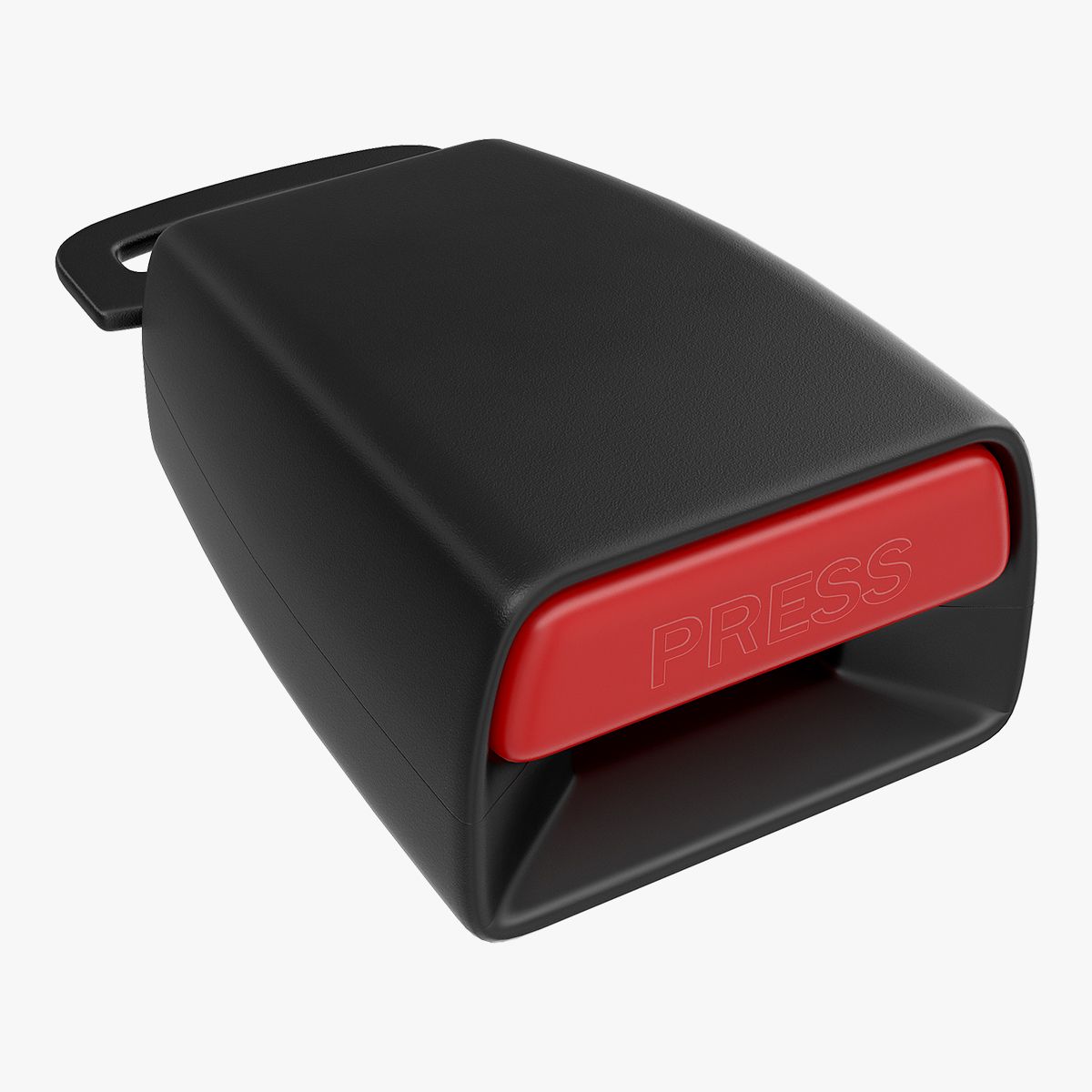
Studio product view of a black automotive seat belt buckle receiver with a red press-release button and a webbing loop at the rear.

The receiver half of the restraint — the housing the tongue plate latches into, with the release mechanism the occupant operates.

Receivers vary in more ways than their appearance suggests. The internal latch geometry determines which tongue profiles the unit will accept; the stalk or mounting arrangement determines where and how it sits relative to the seat; and the release mechanism affects how the unit is operated in the vehicle. A receiver that mounts correctly may still be the wrong choice if it does not accept the tongue already fitted.

Enquiries for this category are most productive when they include a square-on photograph of the existing receiver, a photograph of the tongue it has to accept, and a view of how the unit mounts. Any moulded or printed markings on the housing are worth capturing.

ReferenceSBI / P-01
Category
Buckle receiver / latch housing
Application
Passenger and commercial vehicle seating positions where the receiver half of the restraint requires supply or replacement.
Considerations
Tongue profile accepted, stalk or mounting arrangement, release mechanism, anchorage point, seating position.
Specifications
Technical information available on request.
Enquire about buckle receivers
Cat. 02 Complete Assemblies

Replacement Seatbelt Assemblies

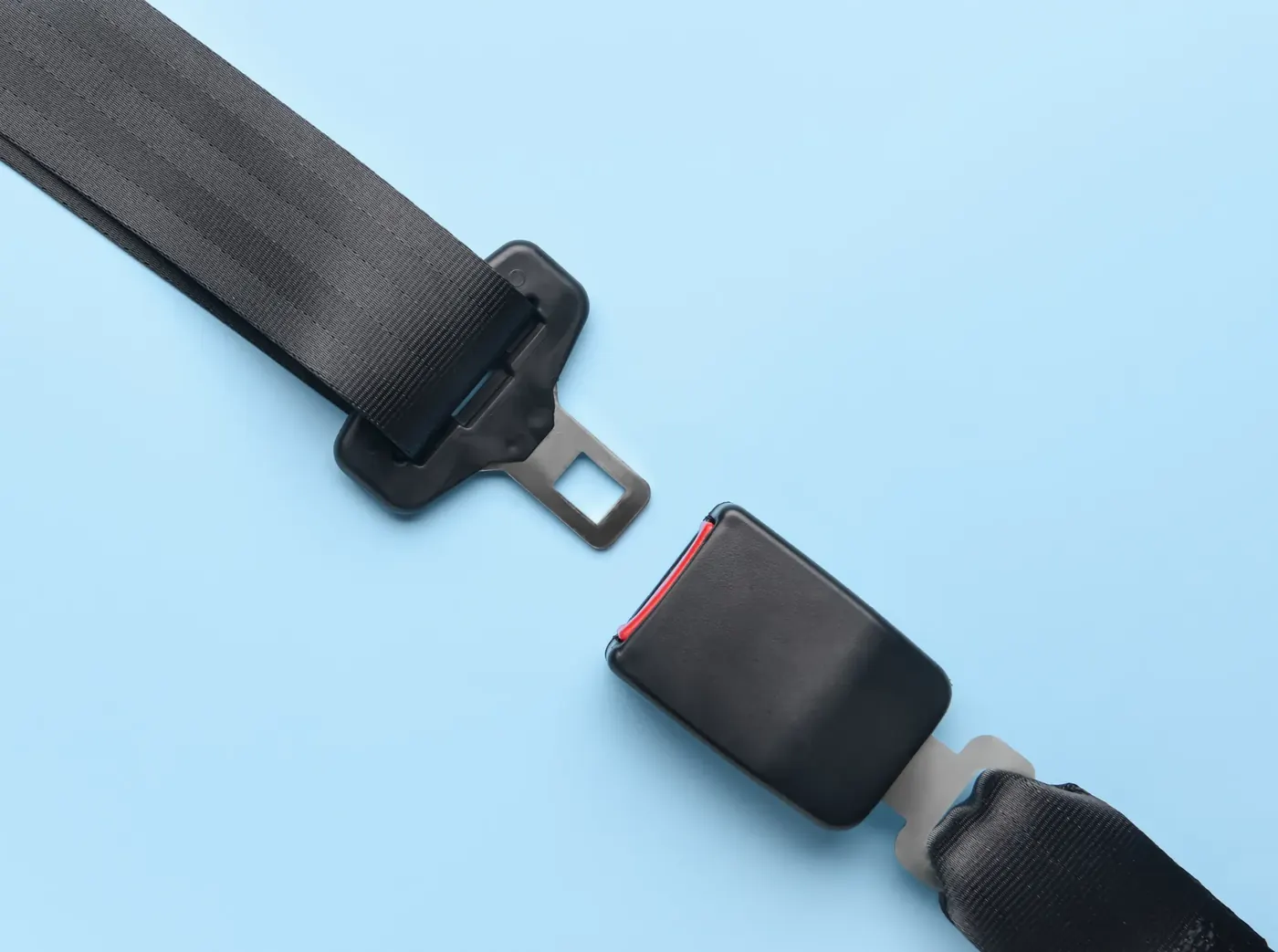
Replacement seat belt assembly photographed on a light blue background, showing black webbing, the metal tongue plate and the separate buckle receiver.

A matched set supplied as one unit — webbing, tongue plate and the corresponding buckle receiver — where the buyer needs the whole arrangement rather than a single element.

Assemblies are the straightforward answer when the existing installation is incomplete, when more than one element has failed, or when a buyer would rather not risk mismatching a replacement half against an unknown original. Because the tongue and receiver come from the same set, the pairing question is settled at source.

The identification work shifts to the vehicle side: what the assembly has to mount to, how the webbing has to be routed, the seating position involved and whether a retractor forms part of the requirement. Photographs of the complete existing arrangement — not only the failed component — are what make this category quick to specify.

ReferenceSBI / P-02
Category
Complete seatbelt assembly
Application
Replacement of a full restraint at a given seating position, or supply where no serviceable belt is currently fitted.
Considerations
Mounting and anchorage arrangement, webbing routing, retractor requirement, seating position, quantity and consistency across units.
Specifications
Technical information available on request.
Enquire about assemblies
Cat. 03 Tongue & Buckle Sets

Tongue Plates & Matched Buckle Pairs

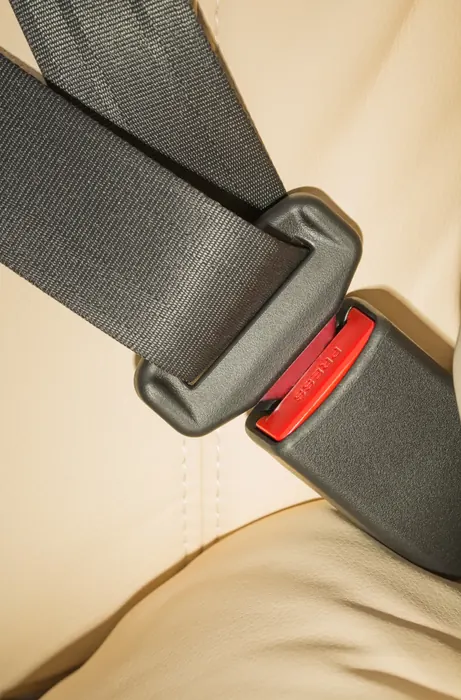
Seat belt tongue plate positioned next to its black buckle receiver with a red release button, against a cream leather vehicle seat.

The latching pair at the centre of every restraint. Supplied together where a buyer needs the interface itself to be correct and consistent.

A tongue plate and a receiver are designed as a pair. The plate's thickness, width, aperture shape and shoulder profile all correspond to the latch inside the housing it is meant for. Two tongues that look interchangeable across a workshop bench frequently are not, and the difference is not always visible until one is tried in the other's receiver.

This is why we ask buyers replacing one half of a pair to photograph the half that is staying. Where the remaining component cannot be identified with confidence, supplying the pair together removes the risk entirely — usually the better answer for a safety component.

ReferenceSBI / P-03
Category
Tongue plate and matched receiver
Application
Requirements where the latching interface itself needs supply, or where the existing counterpart cannot be identified with confidence.
Considerations
Tongue profile and aperture, receiver latch geometry, webbing attachment, seating position, whether one half or the pair is required.
Specifications
Technical information available on request.
Enquire about tongue & buckle sets
Cat. 04 Webbing & Components

Seatbelt Webbing & Restraint Components

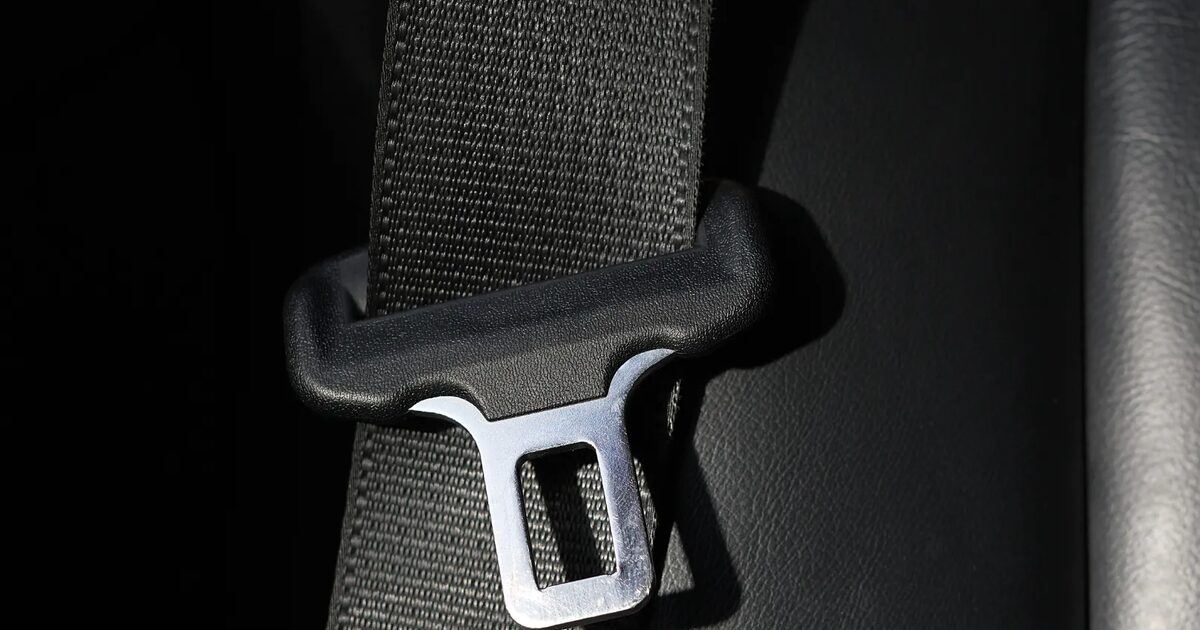
Close-up of black woven seat belt webbing threaded through a moulded guide with the polished metal tongue plate below it.

The webbing itself, together with the individual restraint components requested when one specific element of an existing installation needs replacing.

Not every requirement is a complete belt. Buyers regularly need a single element: a guide, an anchorage fitting, a stalk, or webbing of a particular width and finish. These enquiries turn almost entirely on identification, because the replacement has to work with everything already in place around it.

For this category we ask for photographs of the component in context rather than in isolation — the part in position, what it attaches to and how the webbing passes through or around it. Where a dimension governs the fit, we will tell you exactly where to measure from.

ReferenceSBI / P-04
Category
Webbing and individual restraint components
Application
Replacement of a single element within an existing restraint arrangement, across passenger, commercial and fleet vehicles.
Considerations
Component function, how it interfaces with surrounding hardware, webbing width and finish, relevant dimensions, condition of the existing installation.
Specifications
Technical information available on request.
Enquire about components

A note on specifications

Form SBI / SP
— What is published Component families, what each is used for, and the considerations that determine whether a given item suits an application. Enough to have an informed conversation about a requirement.
— What is not published Webbing widths, load figures, material grades, buckle or retractor types, model numbers, manufacturers, countries of origin, certifications and warranty terms are not listed here as generic values. Published in the abstract they would be misleading, because they belong to a specific product rather than a category.
— How to obtain it Technical information is available on request for the actual product being sourced against your enquiry. Ask for what you need and we will tell you what is known and what is not.
— Regulatory requirements Buyers should verify the standards, approvals and regulatory requirements that apply to their own vehicle, intended use and jurisdiction. We do not represent that any product carries a particular approval unless that is documented for the specific item supplied.

Not sure which category your requirement falls into?

Send a photograph of what you have and describe the vehicle. Identifying the category is our job, not yours.